|
|||||||||||
|
|
|
||||||||||
Details and credits
|
|||||||||||
|
|
|
||||||||||
|
|
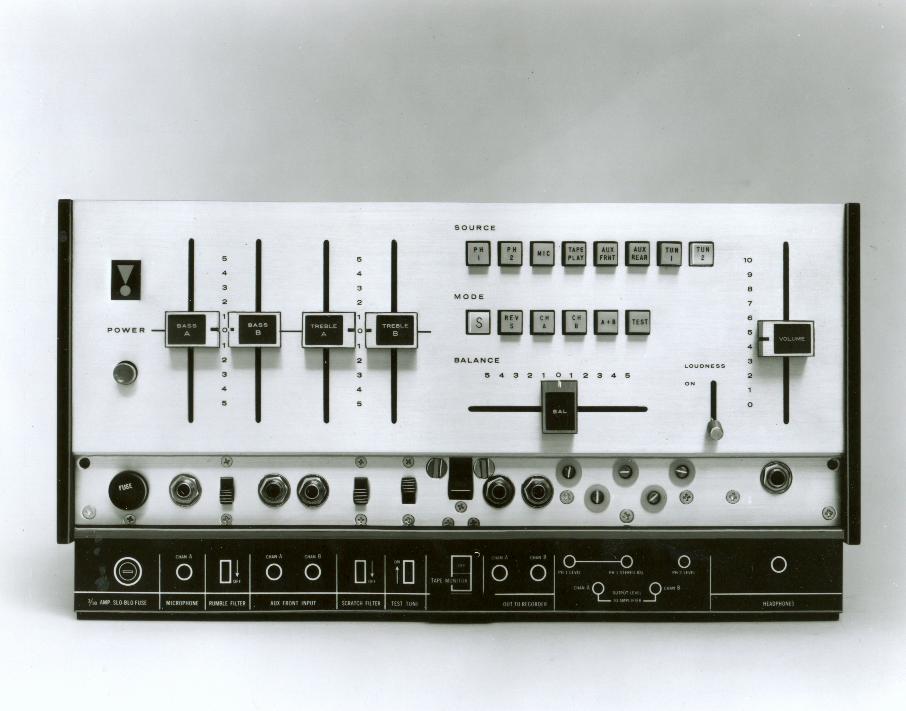
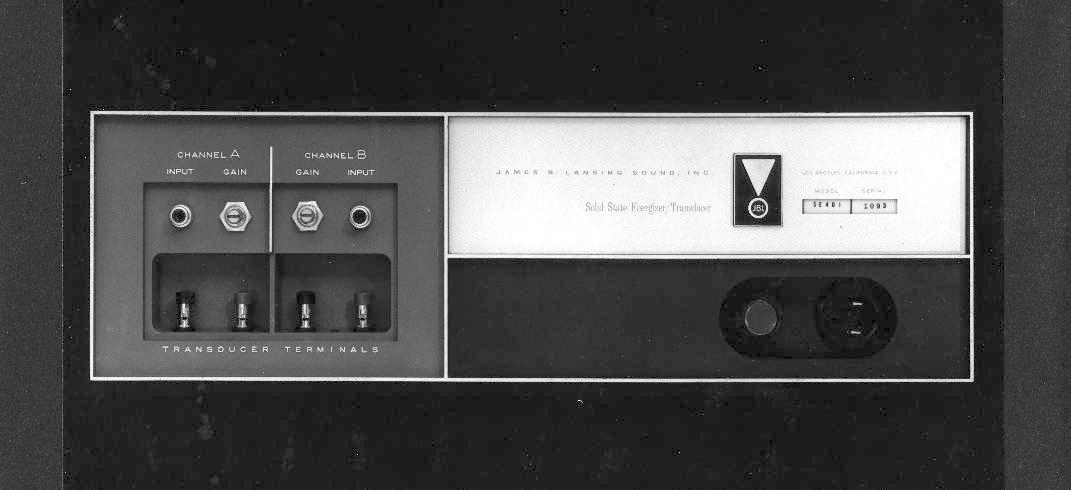
The emergence of JBL's consumer electronics in the mid 1960s was a remarkable effort spearheaded by Bart Locanthi. His theoretical work using analog computer modeling led to state-of-the-art circuitry designs, including the highly innovative "T-Circuit" configuration. The chief project engineer was Lamont Seitz, ably assisted by George Noritake. It was Noritake who did much of the mechanical design work as well as both the electronic and mechanical drafting for the products, while concurrently completing his studies in electrical engineering. After Seitz and Locanthi left the company, Noritake was placed in charge of electronic design and development. Typical of Seitz's and Noritake's contributions was the die cast aluminum faceplate/chassis for the SE408S Transducer Energizer. Originally designed to be mounted in a cutout on the back of the loudspeaker enclosure, the casting served as a heat sink as well as the structural support for the electronic components mounted to the inside of the casting. In the later free-standing version (the SE400S), the casting served the same purpose while also forming the rear panel. The visual concept was the work of Arnold Wolf and the realization of the complex mechanical and thermal details of the casting was accomplished by the JBL team under Locanthi's guidance.
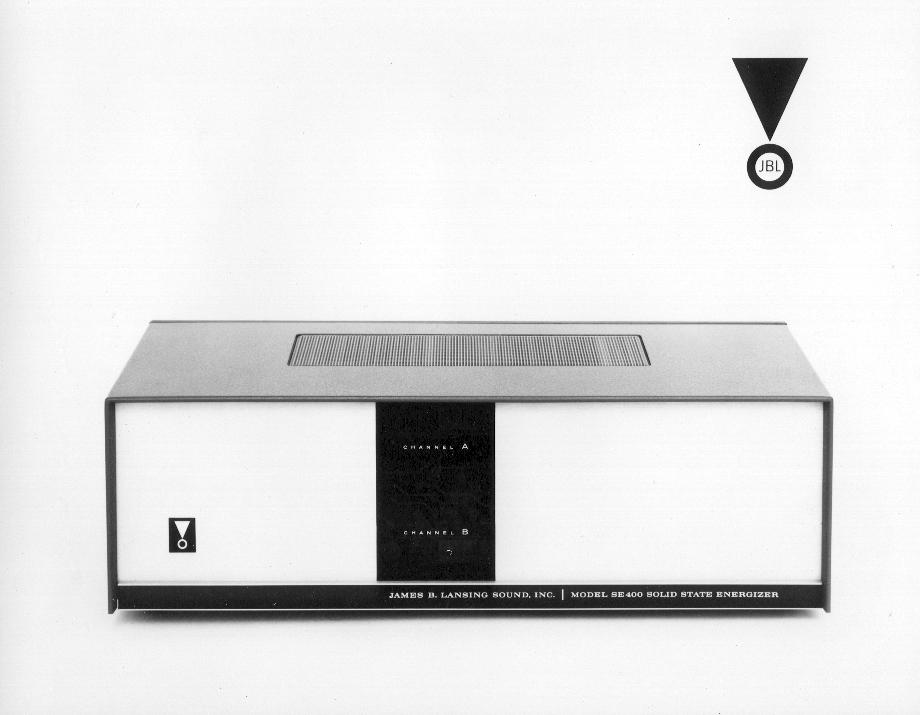
One of the unique features of the Transducer Energizer concept was the use
of a plug-in circuit board to tailor the amplifier's output characteristics
to the requirements of a particular transducer system operating in a
specific acoustical enclosure. When installed in the SE408S application, the
unit was integrally mounted to the enclosure with the special circuit board
concealed from view. In the SE400S configuration it was considered desirable
-- especially in the sales environment -- to make the designation of the
installed circuit board clearly visible. This requirement resulted in the
smoked window on the front of the unit. The aperture appears nearly black
until power is applied and the label on the circuit board is illuminated.
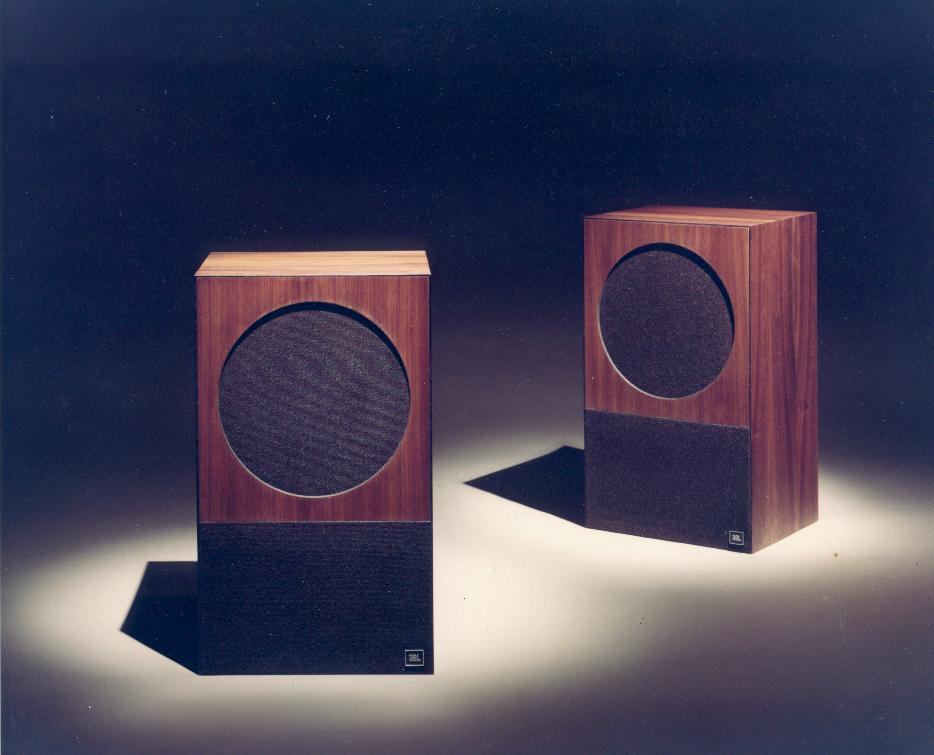
The origin of the L88 Nova requires some historical background. When the
project assignment was given to the Wolf office, the simple two-way system
immediately suggested that the external design might be made to more clearly
express the internal functional elements. The idea of a round grille echoing
the form of the low-frequency transducer had seldom been tried before, and
when it was, public acceptance did not follow. Two notable examples of this
Bauhaus-based approach were an equipment cabinet for Herman Miller
(manufactured from 1949 to 1954) by George Nelson and, in 1956, a stunning
bass-reflex enclosure for Stephens Tru-Sonic designed by Charles Eames.
Neither one was very successful.
©2000 Arnold Wolf
|
||||||||||
|
|
|||||||||||